Pages

TOP WEB SITES

How to Replace an ABS Wheel Speed Sensor

The Anti-lock Braking System (ABS) is one of the most significant parts in the safety package of an automobile. The main job of this technology is to prevent wheel lockup, at a time when momentary wheel rotation is actually needed for proper braking on slippery surfaces. The system functions using several components, out of which wheel speed sensors are one of the most prominent. It is the sensors that keep an eye on the speed of wheels and aid in releasing brake pressure during hard braking. The wheel speed is detected from the toothed wheel by the magnetic sensors, and sent to the ABS computer for brake and release action. If the ABS speed sensor goes bad, the braking will be a kind of irregular and abrupt when braking on low speeds. If you are considering this replacement as a DIY task, wear proper protective gear such as safety eye wear and gloves. Below is an explanation of how to replace an ABS wheel speed sensor.
Steps on How to Replace an ABS Wheel Speed Sensor
Since the sensors use battery power to function, replacing them firstly needs the battery connection to be disconnected. This can be done by disconnecting the negative terminal on the battery under the hood. Place wooden blocks or flat stones in front of every wheel to keep the car stable when doing this repair. In addition, also activate the parking brake. Lift the car using jacks and safety stands on the axle.As the ABS sensors are located behind the wheel assembly, you need to take out the wheel. Use a wrench and turn it counterclockwise on the lug nuts to remove the wheel off the hub. You might need to give a jerk to take the wheel off the assembly. The sensor would be a small black assembly on the hub. If you have just got the sensor changed and are experiencing ABS brake problems, a good idea is to clean the sensor. Clean the oil on the sensor and connectors with a cloth, fix the assembly correctly, and then see if the issue is resolved.
If you are sure about replacing ABS wheel speed sensor, you then need to take out the sensor's cable from the harness connector. The sensor would be joined to the hub by a small bolt which has to be removed. Ensure that you have the same sensor model like the old one to retain proper functioning of ABS. Take the new sensor and fix it on the appropriate place, by tightening the bolt on the assembly. Plug in the harness connector in the respective space on the new sensor.Make sure that there is no visible gap between the toothed wheel and sensor tip. However, the system works fine with a maximum of 0.04 inch gap between these two points. Reinstall the wheel assembly and tighten the nuts securely. Take the car off the jack stands slowly to rest on the ground. Do not forget to connect the negative terminal back on the battery, without which the ABS sensors won't work. During the replacement, you can even think about replacing the sensor cable as well. The total cost of the DIY project might come to around $50, just for the price of a new sensor and cable.Many a times, a simple cleanup of the sensor setup is more than enough to resolve ABS problems. For effective functioning of the system, do a periodical cleanup of the sensors on all wheels. The procedure for replacing ABS sensors on both front and rear axles is much the same as described in the above article. If you are not at all sure about the replacement, it is suggested to take professional help from an authorized service tech.

How to Make Algae Biofuel


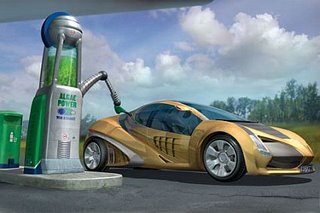
The best way to go about understanding a how is to first get a good understanding of the what involved - that's one principle that I believe in and live by! Hence, before proceeding towards understanding how to make algae biofuel, let's take a closer look at what algae biofuel is all about. As the name suggests, this type of fuel is derived from algae and the method most commonly used is breaking down the alga's carbohydrate content via fermentation. This fermentation would result into biologically produced forms of the alcohols ethanol and butanol. Although it is gaining a lot of popularity these days as a potential alternative for traditional fossil fuels, this is so merely due to the fact that the doubled-edged sword of rapid depletion of traditional resources and ever increasing fossil fuel prices is hanging over the head of human civilization by a precariously thin thread.Other than that, algal fuel doesn't offer us much novelty value in terms of low polluting potential. You see, burning algal biofuel releases equally large amounts of carbon dioxide into the air as burning coal or petroleum based fuels do, as algae, being plant forms, need atmospheric carbon dioxide for photosynthesis. When you make fuel out of algae and burn it, this locked up carbon dioxide gets released into the atmosphere, undoing what algae did during its lifetime as a botanical life form. That being said, let's proceed towards finding out all about the algae biofuel extraction process.

Things We Can Do To Stop Global Warming

Global warming is caused due to the rising levels of carbon dioxide in the atmosphere that embraces the radiated heat and stores it, increasing the overall global temperatures to dangerous levels. The rising temperatures have caused the glaciers to melt, thus causing an increase in the sea level. Unpredictable weather and a strange change in climate patterns are also some of the effects of global warming. In fact, according to a recent study, over the past three decades our planet is said to be shrinking at a faster rate. Extreme climatic conditions like drought in some parts of the world while heavy rains in some others and record heat waves in most of the parts have send an alarming message to stop global warming. It is not that we are not trying to curb global warming; the governments of various countries and the UN (United Nations) have already started with their efforts to address the problem of global warming. They are doing their bit, and its time for us to address this sensitive problem on a personal level. Given below are a few things we can do to stop global warming.

Plant Mitosis Vs. Animal Mitosis

Microscopic cells are a vital component of all living organisms and each living body, whether plant or animal, is made up of several such cells which contribute towards carrying out basic life functions. In order to sustain life these cells need to reproduce from time to time, so as to keep their numbers constant. Over time, cells suffer from wear and tear and old age, and eventually stop functioning, so it is extremely essential for these cells to be present in large numbers and in a healthy state in order to sustain life.Cell division is something that has fascinated scientists for many years now, and the ability of these cells to create perfectly identical copies of themselves is truly something to be marveled at. Irrespective of all the wonders of technology around us, the fact remains that something as simple as cell division is a truly magical process. This cell division is what is known as Mitosis, and this is what keeps living organisms alive. Needless to say, the process of mitosis in plants and animals is very different, and this is why one needs to understand the complete difference between plant mitosis vs. animal mitosis.
What is Mitosis
The cells inside plants and animals are known as Eukaryotes, and these are cells that are embedded and housed inside membranes. The most important membrane of this cell is the nucleus, and this is what distinguishes eukaryotes from prokaryotes, and the nucleus is also the component that enables cell division and mitosis. Mitosis is nothing but the division of one single cell into two genetically identical cells, and this is carried out for the sole purpose of continuing life. Mitosis is immediately followed by a process known as Cytokinesis, and both these processes together define the Mitotic Phase of the cell cycle in a living body. The various stages of mitosis are as follows.

    * Interphase: Though this phase is not really a part of mitosis, it generally precedes the whole process of cell reproduction. It does so by preparing the cell for division and also provides it with all the necessary nutrients and proteins.
    * Preprophase: This phase occurs only in plant cells, and it involves the creation of a bisecting line along the center of the cell, and this line shows where the cell will divide. This bisecting line is known as Phragmosome and it is made of cytoplasm.
    * Prophase: In this phase the chromatin (which is the combination of the proteins and DNA of the nucleus) gets divided into two chromosomes which are still attached to each other, and each of these chromosomes start moving to opposite sides of the cell.
    * Prometaphase: This phase precedes metaphase, and in this case the nucleus fragments start breaking and moving towards the chromosomes. The microtubules of the cell also slowly start attaching themselves to the chromosomes and this is a sign that the cell division has truly begun.
    * Metaphase: The microtubules now get attached to the kinetochores on the chromosomes, and they start moving to opposite sides with renewed speed. The alignment between the chromosomes is equal, and the DNA distribution is exactly identical as well.
    * Anaphase: In this phase the chromosomes get cleaved right through the center and they move completely to different sides of the cell. Many stages of elongation and bisection are carried out here for the chromosomes to be divided.
    * Telophase: The last step of mitosis involves the actual splitting up of the chromosomes into two distinct parts, and the cleaning up and the strengthening of the membrane also occurs here. Upon the completion of this stage, the process of mitosis is completed, and the process of cytokinesis then begins.

Pros and Cons of Vegetable Oil as Fuel

As the issue of depletion of non-renewable sources is gaining momentum, researchers have started looking for other alternatives. There is a huge strain on gulf countries to produce oil in adequate quantities to satisfy the need of various countries of the world. Environmental concerns have also played an important part in establishing the need to look at other sources of energy, which are relatively less dangerous for the environmental health. Vegetable oil has emerged as strong contenders as an alternative fuel, however their use in commercial vehicles is still at an early stage.Vegetable oil can be used as an automobile fuel as there is a lot of waste that comes out from cooking and other agricultural products. Vegetable oils that are used as a fuel come under two categories - Straight Vegetable Oils (SVO) and Waste Vegetable Oils (WVO). As the name suggests, SVO is the oil that is available in the grocery stores and this oil can work in diesel engines after making some necessary modifications to the engine. WVO on the other hand, is the oil that has been used for cooking. The global food industry produces WVO in huge amounts, which when purified can be used as a fuel. There are numerous advantages of using vegetable oil as a fuel but there are some challenges involved before it can be used in automobiles on a large scale. Let us take a look at the pros and cons of vegetable oil as fuel.

ADDS

FREINDS LINKS